
The Psychology of Money: Powerful Secrets to Transform How Your Mindset Shapes Your Income
Money is about mindset, not just numbers. Your financial mindset affects how much you make, save, and invest. This hidden link between belief and behavior is examined in The Psychology of Money, which demonstrates that mental, not physical, is where financial success starts.
A lot of people concentrate on learning financial skills, such as investing, negotiating, and budgeting. Although skills are important, how well you use them is frequently determined by your underlying mindset.
Gaining confidence, reprogramming limiting beliefs, and unlocking greater earning potential are all made possible by an understanding of the psychology of money.
1. What Is the Psychology of Money?
The Psychology of Money refers to your mental and emotional connection to wealth—the attitudes, behaviors, and beliefs that influence your financial choices—is referred to as the psychology of money. Typically, these ideas are established during childhood and gradually strengthened.
For instance:
- You might have internalized a scarcity mindset if you were told as a child that “money doesn’t grow on trees.”
- You might naturally approach money with confidence and inventiveness if your family saw it as a tool for opportunity.
This way of thinking functions as a thermostat, determining the amount of money and stability you unconsciously feel you are entitled to. This mental thermostat needs to be reset before you can alter your financial reality.
2. The Science Behind Money and Mindset
People rarely make financially sound decisions based only on logic, according to behavioral economics. Our decisions are greatly influenced by our emotions, prejudices, and self-perception.
Self-Sufficiency
Earning potential is based on the psychologist Albert Bandura’s theory of self-efficacy, or the conviction that one can succeed. People are more inclined to start businesses, learn new skills, or bargain for raises if they think their financial situation will improve. Financial stagnation is reinforced when people with low self-efficacy avoid opportunities.
Abundance versus Scarcity
The difference between mindsets of abundance and scarcity is a major theme in The Psychology of Money:
- “There’s never enough” is a scarcity mindset. It discourages taking risks and instills fear.
- “There’s always a way to create more” is an abundance mindset. It encourages initiative, creativity, and fortitude.
Your income frequently increases or decreases in accordance with the dominant mindset.
3. How Childhood Shapes Your Financial Beliefs
Your earliest experiences with money form deep emotional imprints. This process, called financial imprinting, explains why adults repeat the same money patterns their parents modeled.
Common examples include:
- Money as security: Having financial difficulties as a child can instill fear-based saving behaviors.
- Money as status: When you see wealth as a measure of value, you might feel pressured to work harder or spend more money to gain acceptance.
- Money as evil: Self-sabotage or guilt can result from negative messages about wealth.
Think back on these early lessons and determine which ones still apply to you and which ones require revision in order to develop a positive relationship with money.
4. The Emotional Drivers of Income
Money is deeply emotional. Our earning potential is often tied to how we feel about ourselves.
Self-Value and Worth
Individuals who have confidence in their value demand proper compensation, charge the appropriate price, and look for opportunities to expand themselves. Those who do not have a strong sense of self-worth will typically remain underpaid, despite having adequate skills. One of the most potent ideas presented in The Psychology of Money is that your earning potential will often gravitate toward the same level as your self-worth.
Fear of Judgment
Some people unconsciously fight against financial success because they fear being judged — as greedy, arrogant, or “different.” This fear can silently limit earnings as you resist heading out of the socially acceptable limits.
Comfort Zones
Everyone has a financial comfort zone. If you have always earned roughly the same amount, your brain considers that level of income to be “safe”. Transcending this level of income requires both palpable strategy to the numbers but also a psychological growth or expansion..
5. Your Actions and Your Mindset
What you do shows what you believe about money.
- Spending: Do you spend without thinking to feel good, or do you spend based on what you care about?
- Saving: Do you save because you’re scared, or because you feel powerful?
- Investing: Do you avoid risks, or do you take smart risks to grow your money?
People who are good with money make choices on their own terms. They see money as something that can help them, not a problem.
6. Mental Roadblocks That Limit What You Can Earn
Even individuals who desire success can become trapped in self-defeating thought processes. The Psychology of Money discusses several in detail:
Loss Aversion- The fear of losing money exceeds the desire to make lots of money.
Anchoring Bias- You expect to earn what you earned previously, rather than the potential earnings you have in the future.
Confirmation Bias- You tune into the things that support your narrative (“money is difficult”) and fail to tune into counter examples.
Imposter Syndrome- You do not believe your skill sets warrant charging what they should.
Identifying these biases become an initial step in freeing your mind when it comes to your finances.
7. Change How You Think About Money
To change your money mindset, you need to be aware, change your perspective, and take action.
Step 1: Know What’s Holding You Back
Write down what you think about money. Are these facts, or just what you assume? Like, change “I’ll never be rich” to “I’m learning how to make money.”
Step 2: Stop Thinking Poor
Question a scarcity-based thinking. When you say, “I can’t pay for that,” ask, “How can I pay for that?” This teaches your brain to find answers, not limits.
Step 3: Visualize It and Believe It
Visualizing yourself being successful changes your brain. Envision yourself unencumbered by worry as you make money, save money, and invest money. The more normal wealth seems to you in your brain the easier it will be to make wealth your reality.
Step 4: Take Baby Steps
Every time you purposefully do something that takes a stand to your new belief — negotiate your salary, invest, or start a side hustle — you show yourself that this new money mindset is real.
8. How Others Affect Your Money Psychology
Who you spend time with affects how you think. We tend to copy what others believe and do.
- Spend time with people who are good with money.
- Read about people who made money from nothing — it shows you can do it too.
- Stay away from conversations that focus on not having enough.
In The Psychology of Money, this is called “social contagion”: how you think about money, like feelings, can spread.
9. Feelings and Financial Success
Emotional intelligence (EQ) — being able to handle your feelings and talk to others well — is important for financial results. People with high EQ:
- Deal with stress without panicking.
- Negotiate with understanding.
- Think long-term when making business and investment choices.
Working on your EQ can increase your income and make you feel happier and more secure with your finances.
10. Connect What You Do with What You Care About
You’ll feel the most fulfilled when your money is tied to what matters to you. When your income helps you reach your goals, you’ll be more motivated.
Ask yourself:
- What does money let me do?
- How can I help others while also helping myself?
This change in mindset turns making money into pursuing a purpose — the best part of The Psychology of Money.
11. In the End: Your Mindset Is What Matters Most
The Psychology of Money says that wealth starts in your head. Your financial situation shows not just what you can do, but what you believe, how you feel, and what you do every day.
When you change how you think about money — from not enough to plenty, from fear to confidence, from limits to chances — your actions change. You take smarter risks, find better chances, and see yourself as someone who can create wealth.
Money doesn’t define you, but your mindset defines what money can do for you. Control your psychology, and your income will follow.
12. How to Manage Your Money
The Psychology of Money explains how financial success starts at the level of your mindset, not just your paychecks. It is about your thoughts, emotions, and habits that affect every financial decision you make. When you understand The Psychology of Money, you will be able to identify patterns that determine if you save, spend, or invest in a smart manner. The Psychology of Money concepts will empower you to switch from fear and scarcity to confidence and abundance. You will not only start to shift your thinking about money but you will also begin to feel more objective and mindful in how you manage your money.
For instance, someone who fears losing money may completely avoid investing their money and therefore miss out on future long-term growth. A separate person, who relates their self worth to their spending, may spend carelessly to feel successful only to create debt and tension as opposed to financial wellness. Being aware of emotional triggers can be a part of mastering The Psychology of Money.
Tyes of Money Mindsets
- Scarcity Mindset:
The scarcity mindset assumes that there will never be enough. Individuals with a scarcity mindset often think about what to save rather than how to create more. Although they are careful, they may fail to see opportunities to expand their financial situation.
2. Abundance Mindset:
The abundance mindset believes that money is renewable — something that can be earned, created, and multiplied. Individuals with the abundance mindset are more open to assessed risks associated with investments in stealth, resources, and self-growth.
3. Security Mindset:
Individuals with a security mindset value stability and security above anything else. Security mindset are savers and will develop discipline in saving but avoid anything that represents uncertainty, even if profitable.
4. Achievement Mindset:
This achievement mindset may see money as a reflection of success and progression. Individuals with this mindset may be driven and ambitious but need to be cautious with burnout and not tie their self-worth to their income numbers.
When we study The Psychology of Money, we begin the journey of locating our own emotional tendencies toward money, shifting toward abundance, and intentionally learning how to manage our own money not from a fear standpoint, but from a confident and controlled standpoint.
There Are Some Books About Money Psychology That Can Change Your Income
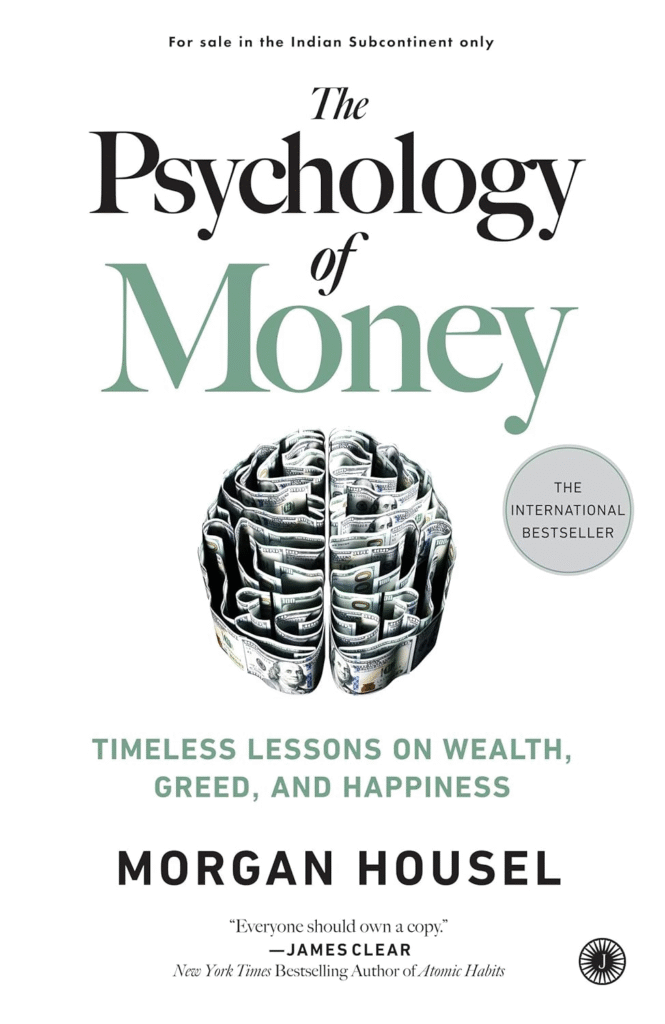
Here’s a glimpse of what you’ll find:
- Timeless lessons, not get‑rich‑quick schemes. Instead of complex formulas or flashy investment advice, this book focuses on behavior, psychology, and mindset — arguably the most important factors in long-term financial success.
- Real-life stories & simple language. Housel uses 19 short, compelling stories to illustrate how people — from everyday workers to famous investors — think about money differently. This makes the material accessible and relatable, even if the reader has little financial background.
- The lessons discussed within the pages of this book about wealth, happiness and all things related are universal; therefore, it pushes back against a lot of the unsubstantiated beliefs that people have about being wealthy, risk-taking and being successful financially/achieving personal success in life.

Here’s a glimpse of what you’ll find:
- 3 proven steps to conquer emotional spending and align your financial actions with your beliefs. The 5 most common psychological biases that sabotage your financial success – and how to overcome them.
- The powerful link between emotional intelligence and financial success
- 4 effective strategies to manage and reduce overwhelming debt stress. How to set and shatter your financial goals with laser focus
- Gender-specific insights empowering both men and women to tackle unique financial challenges head-on. Time-tested techniques to bolster your financial literacy with ease and confidence. Exciting exercises designed to transform your financial mindset and enrich your personal growth

This is not a book about numbers—it’s a book about you.
You’ll uncover:
- Why your childhood shaped your financial decisions.
- How unconscious beliefs can sabotage your wealth.
- What emotional patterns keep you in scarcity mode.
- How to reprogram your inner dialogue and unlock abundance.
With practical exercises, powerful reflections, and a final financial mindset test,
Recommendation
- learn history of money.
- Essential Information About Good Debt and Bad Debt
- The Psychology of Money
- Manage Your Money
- 5 tips of high income skills You Can Learn Online