
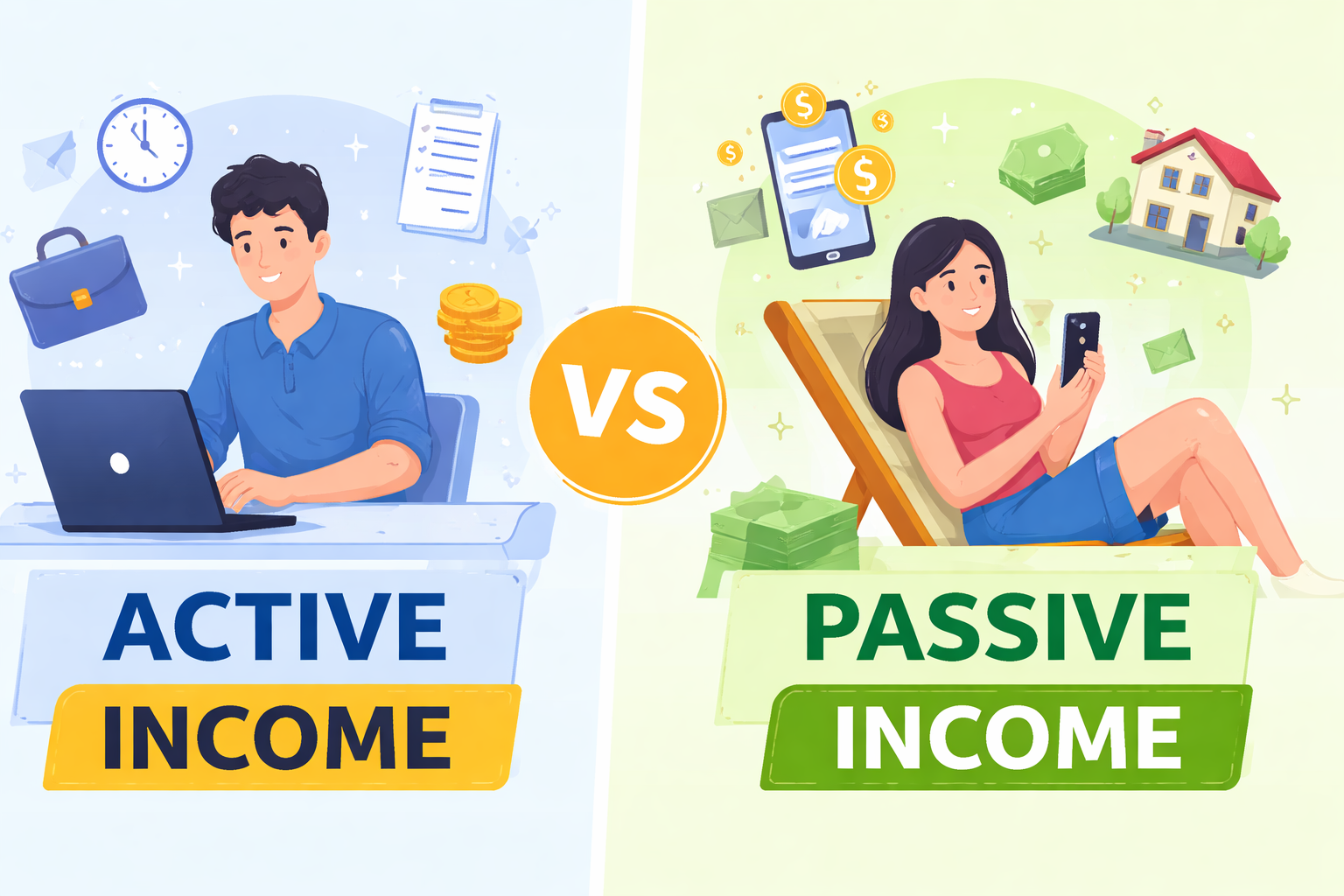
In today’s world, earning money is one of the most important parts of life. Whether you are a student, an employee, or someone planning to start a business, understanding how income works can shape your future. One of the most popular and useful concepts to learn is Active vs Passive Income. These two types of income are very different, and knowing how they work can help you make smarter financial decisions.
Let’s explore what Active vs Passive Income means, their differences, and why both are important.
What Is Active Income?
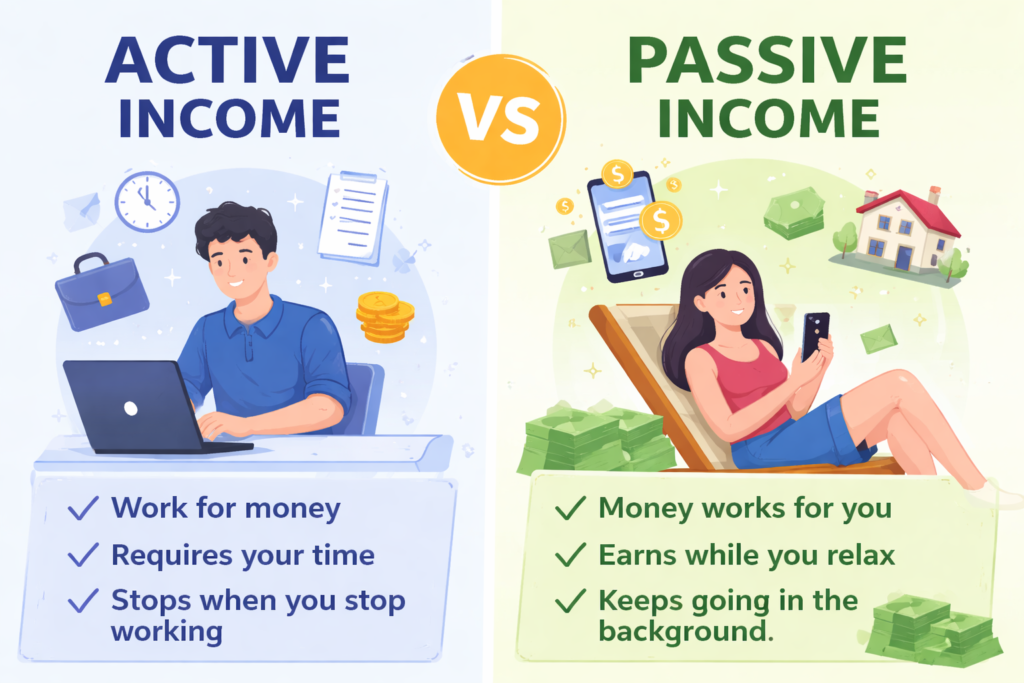
Active income is the money you earn by actively working. This means you trade your time, effort, or skills for money. If you stop working, the income usually stops as well.
Common examples of active income include:
- Salaries from jobs
- Wages from hourly work
- Freelance projects
- Small services like tutoring or designing
For example, if you work as a teacher, you earn money by teaching students. If you stop teaching, you stop earning. This is the core idea of active income.
Active income is the most common way people start earning money. It is reliable and often steady, which makes it important, especially in the beginning of your financial journey.
Advantages of Active Income
Active income has several benefits. First, it provides immediate earnings. You don’t have to wait long to see results. Second, it is predictable. If you work a certain number of hours, you know how much you will earn. Third, it helps you build skills and experience, which can increase your earning potential over time.
Disadvantages of Active Income
However, active income also has limitations. The biggest one is time. You only have 24 hours in a day, so your earning potential is limited by how much you can work. It can also become tiring, as it often requires consistent effort. If you get sick or take a break, your income may stop.
What Is Passive Income?
Passive income is money you earn with little or no daily effort after the initial work is done. Unlike active income, passive income continues even when you are not actively working.
Examples of passive income include:
- Earnings from a YouTube channel after uploading videos
- Income from writing a book or creating digital content
- Rental income from property
- Earnings from investments
For instance, if you create a video and upload it online, you may continue earning from it for months or even years without doing much additional work. This is passive income.
Advantages of Passive Income
Passive income offers financial freedom. Once it is set up, it can generate money continuously. It also allows you to focus on other things like learning, عبادات (worship), or spending time with family. Another big advantage is that it is not limited by time in the same way as active income.
Disadvantages of Passive Income
Passive income is not always easy to build. It often requires time, effort, or money at the beginning. For example, creating content or investing money takes planning and patience. There is also risk involved, especially with investments, where income is not guaranteed.
Key Differences Between Active vs Passive Income
Understanding Active vs Passive Income becomes easier when you compare them directly:
- Effort: Active income requires constant effort, while passive income needs less ongoing effort.
- Time Dependence: Active income depends on your time, but passive income can continue without your daily involvement.
- Stability: Active income is usually more stable in the short term, while passive income may take time to become stable.
- Scalability: Passive income can grow more easily because it is not limited by your time.
These differences show why many people aim to move from only active income to a mix of both.
Why Active vs Passive Income Matters
Learning about Active vs Passive Income is important because it helps you plan your financial future. If you rely only on active income, you may always need to work to earn. But if you build passive income, you can create more freedom and security.
For example, imagine having a job (active income) while also earning from a YouTube channel or a digital product (passive income). This combination can give you more stability and opportunities.
For young people, especially students, starting with active income is normal. But it is also smart to think about ways to build passive income over time.
How to Start Building Passive Income
You don’t need a lot of money to begin. You can start small. Here are a few simple ideas:
- Learn a skill like video editing or graphic design and create digital products
- Start a content platform and share useful or educational videos
- Save money and learn about safe investing
- Write short guides or eBooks about topics you understand
The key is consistency. Passive income does not happen overnight, but with patience, it can grow.
Balancing Active vs Passive Income
The best approach is not choosing one over the other, but balancing both. Active income gives you stability and helps you survive daily needs. Passive income helps you grow and build long-term wealth.
Think of active income as your foundation and passive income as your future. Both are important.
Conclusion
In conclusion, understanding Active vs Passive Income is a powerful step toward financial awareness. Active income is earned through direct work and effort, while passive income continues with less ongoing effort after the initial setup. Each has its advantages and challenges.
If you focus only on active income, you may feel limited by time. But if you slowly build passive income, you can create more freedom and opportunities in your life. The goal is to start where you are, use your skills, and think long-term.
By learning and applying the concept of Active vs Passive Income, you can take control of your financial journey and build a better future.
Recommendation
- Why Most People Fail Saving Money
- Is Trading Halal in Islam?
- How to Start Making Money on YouTube: The Complete Guide for 2026
- How Do I Improve My Money Mindset?
- What Is the Meaning of Money?
- What Is Trading and How Does It Work?